


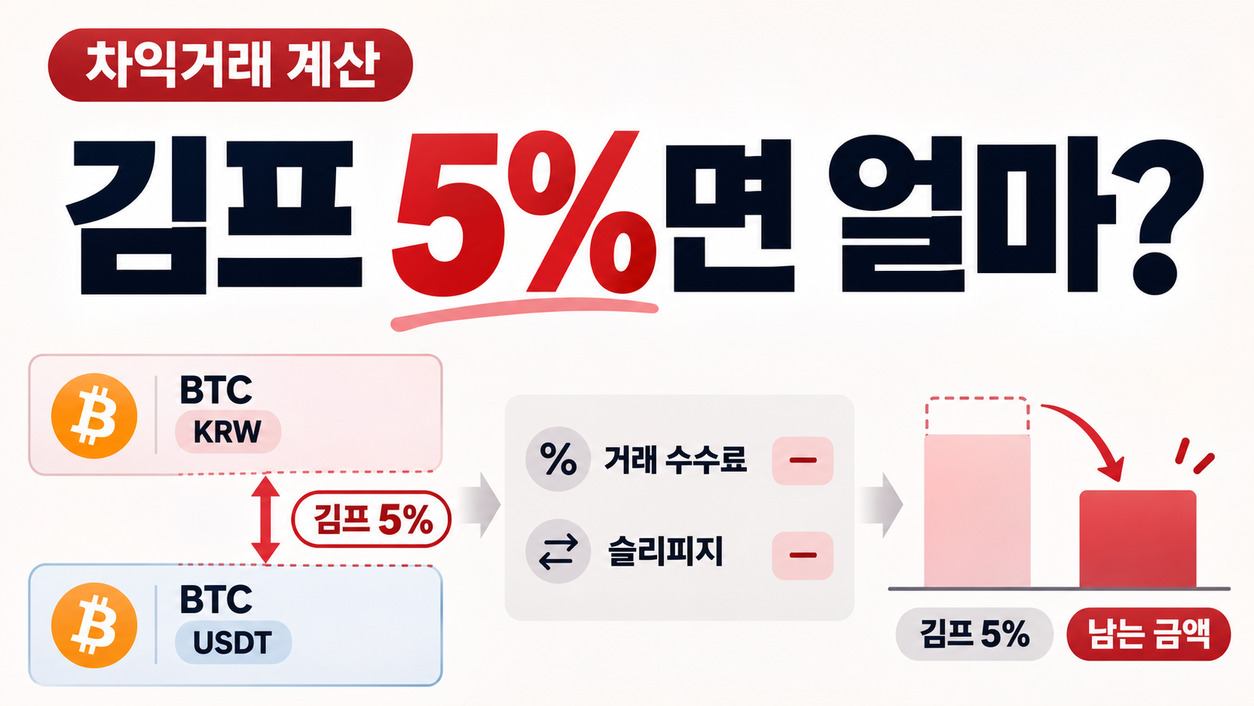
GIMP 5% means that the comparative prices of the two exchanges have increased by 5%. The net profit or loss of a transaction is calculated by reflecting the purchase principal and transaction, withdrawal, and exchange costs from the amount converted to the same currency after selling. If the contract price or price changes during movement, a loss may occur even if you start from the same 5%.
GIMP trading and inter-market arbitrage
The expression GIMP trading is used for both transactions that take advantage of price differences between exchanges and transactions that target changes in GIMP itself. The mock calculation below deals with a single transaction in which assets purchased overseas are sold domestically and the price is converted to the same currency as the first. If you first determine the range, it becomes clear at what point in time the price will be and what costs will be included in the profit or loss.
Why the price on the screen and the actual transaction price are different
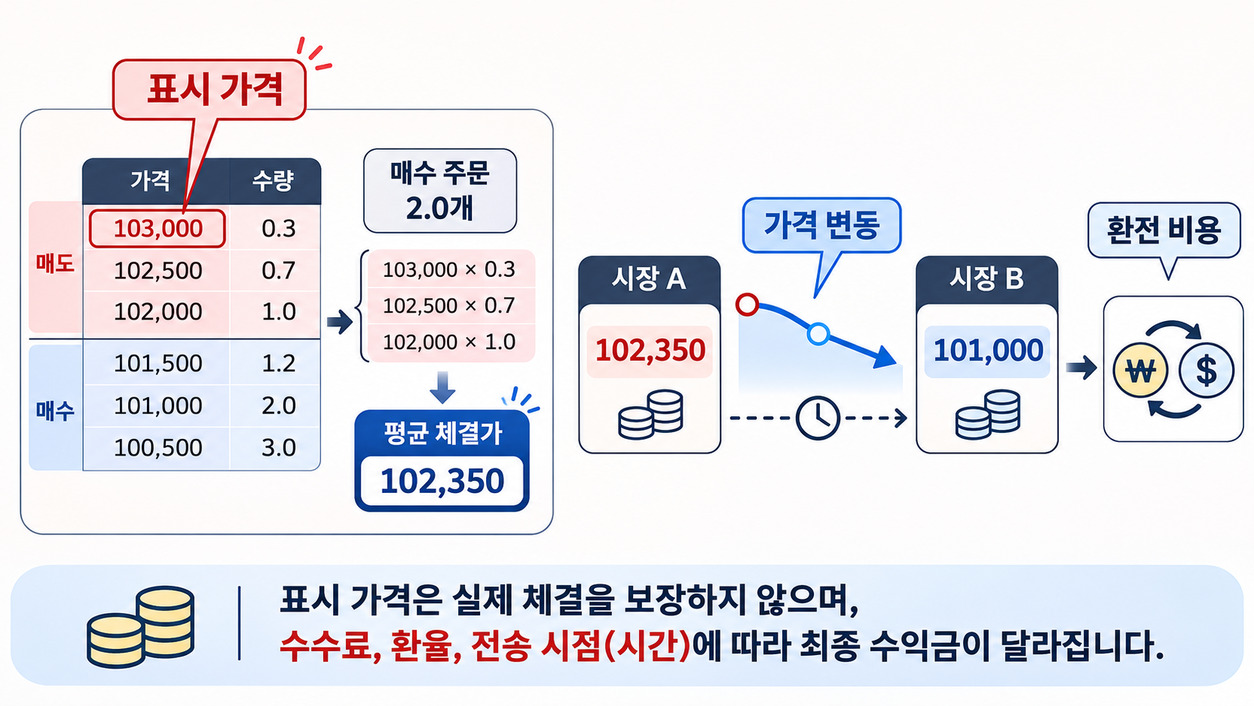
The most recent transaction price in the price list is the price at which the transaction was concluded immediately before. Check the price at which you can buy now from the ask price, and check the price at which you can sell now from the bid price. If the entire order quantity cannot be filled at one price, the order is divided into several prices, so the average execution price weighted by the actual quantity is used for profit and loss. To see the criteria used for price comparison: GIMP calculation formula displayed on screenYou can refer to
If buying and selling occur at different times, the price changes in between. If the domestic bid price is lower when the asset movement is completed, the selling difference may be smaller than the GIMP you first saw. In the process of returning the sale proceeds to the starting currency, the exchange price and cost also affect the final recovery amount.
Three cases where net profit or loss varies from the same GIMP 5%
Assume that the overseas purchase principal is equivalent to 1 million won, and the domestic price displayed on the screen at that time is 1.05 million won. In all three cases, the contract quantity is the same, and taxes are excluded from the calculation scope. The amounts in the table are for simulation calculation purposes only and do not represent actual rates on the exchange.
item | A · Profit | B · Break-even | C·Loss |
Overseas purchase principal | 1,000,000 won | 1,000,000 won | 1,000,000 won |
Domestic display price at the time of purchase | 1,050,000 won | 1,050,000 won | 1,050,000 won |
Exact price at the time of actual sale | 1,048,000 won | 1,020,000 won | 1,012,000 won |
Total transaction, withdrawal, and currency exchange costs | 18,000 won | 20,000 won | 25,000 won |
Simulated Net Profit and Loss | +30,000 won | 0 won | −13,000 won |
Simulated profit/loss ratio compared to purchase principal | +3.0% | 0% | −1.3% |
In the table, all amounts are set to Korean Won equivalents. The simulated net profit or loss is the sum of the purchase principal and costs minus the sale price. For C, 1,012,000 − 1,000,000 − 25,000 = −13,000 won. The price difference initially shown was 50,000 won, but the difference actually secured at the time of sale was 12,000 won, which does not cover the costs. Situations where the price changes at the time of sale How to Read Prices When GIMP ShrinksYou can see more here.
If the impact of the price difference and order size has already been reflected in the sale execution price, the same impact is not subtracted from the cost items again. If the withdrawal fee is deducted from the coin quantity, the selling price is calculated based on the actual arrival quantity and the already deducted fee is not reflected twice.
Terms and conditions to check before calculating costs
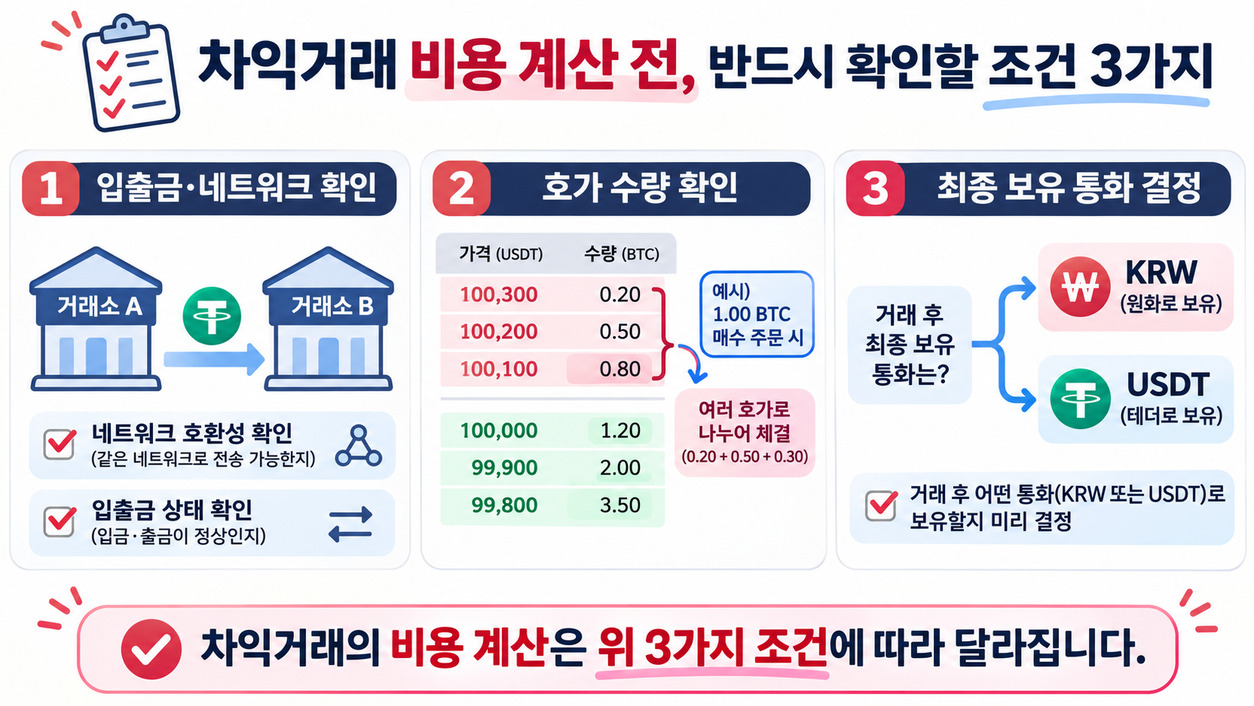
Check if deposits and withdrawals are possible. Even if the assets are the same, if the networks supported by the two exchanges are different or deposits and withdrawals are temporarily suspended, it is difficult to sell at the assumed time.
Check whether the required quantity can be executed at the given price. If you assume that the entire quantity is traded at one price displayed on the screen, you may miscalculate the buying cost or selling price.
Finally, decide which currency to hold. The calculation range of the recovery amount is different in cases where the sale ends in Korean won and when it is converted back to the starting currency.
Makarov and Schoar, who studied price differences between exchanges, explain that constraints on capital movement between markets affect the persistence of price differences. To evaluate the possibility of an actual transaction, you must check the price difference as well as order execution, asset movement, and payment recovery. The reason for the price difference is The reason for the kimchi premiumYou can check it here.
Check out more Aseonmo mock investment guide videos:
0 Comments
No comments yet. Be the first to share your thoughts.