


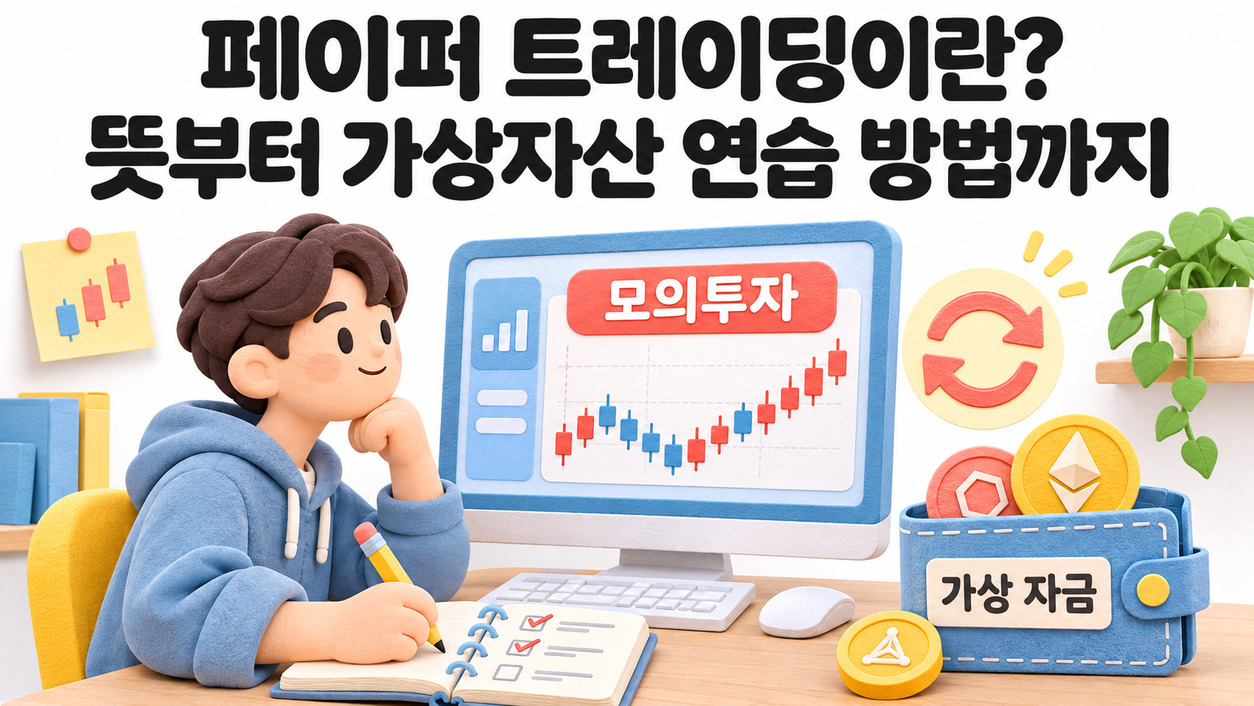
Even if you look at the chart and think about when to buy, you may be hesitant to actually place an order. paper tradingis a way to practice trading with virtual funds instead of real money. By placing orders and recording the results, you can examine your judgment and trading habits.
What is paper trading?
In paper trading, you select an item and quantity and submit a mock order. Afterwards, we check the profit and loss due to the price change. However, whether there is a delay in the market price and the way the transaction and costs are reflected vary from platform to platform.
here virtual moneyis the balance for practice, virtual assetsrefers to an asset such as Bitcoin. The two terms have different meanings. Profits earned through simulated trading are not actual cash profits.
How to Paper Trade for Beginners
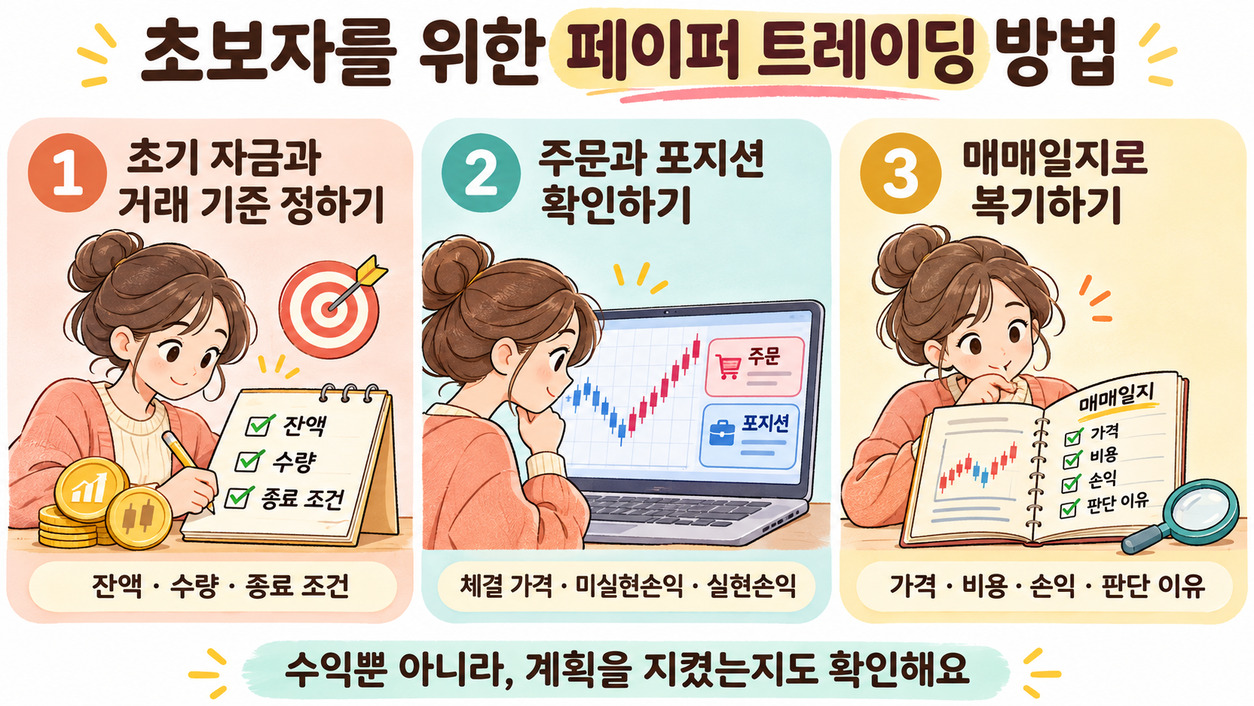
1. Set initial funds and trading standards
First, record the provided balance and select an item to practice. It is easier to review impulsive orders if you write down the reason for entry, order quantity, loss range, and exit conditions in advance.
2. Check orders and positions
Check the supported order types and place a mock order. Compare the requested price and the execution price, and distinguish between unrealized profits and losses from positions still held and realized profits and losses from closed transactions.
3. Recover with sales journal
Record entry and exit prices, quantity, cost, profit and loss, and reason for decision. Even if a profit is made, if the plan is broken, it is indicated separately. How much money did you earn and what process did you go through? It's important to check.
Crypto asset paper trading, BTC example
Let’s assume you entered a long position of 0.01 BTC with 60,000 USDT in the linear BTCUSDT product.
Ends at 63,000 USDT: (63,000 − 60,000) × 0.01 = 30 USDT profit
Ends at 57,000 USDT: (57,000 − 60,000) × 0.01 = 30 USDT loss
If you want to take a closer look at the calculation process, How to calculate simulated investment returnsPlease refer to .
This is an example for explanation purposes excluding commission and funding costs. In futures practice, you should also check leverage, margin, and liquidation conditions. Also see how those costs and conditions are reflected in the simulated environment.
Don’t judge your skills based solely on simulated returns.
In real trading, liquidity, slippage, costs and psychological burden can affect the results. Rather than just a few profits, check whether you followed the same rules in various market situations. Simulated performance does not guarantee actual investment performance. Simulated investment risks and precautionsAlso check it out.

Start your first mock trading at Aseonmo
If you want to apply what you've learned Register an Asunmo account and practice mock trading with virtual funds.. Rather than making a big profit, your first goal should be to learn the ordering process and record each transaction until the end.
ASUNMO is a trading simulation platform and does not provide actual order execution or brokerage or personalized investment advice.
0 Comments
No comments yet. Be the first to share your thoughts.